
Which Microscope Is Better for School?
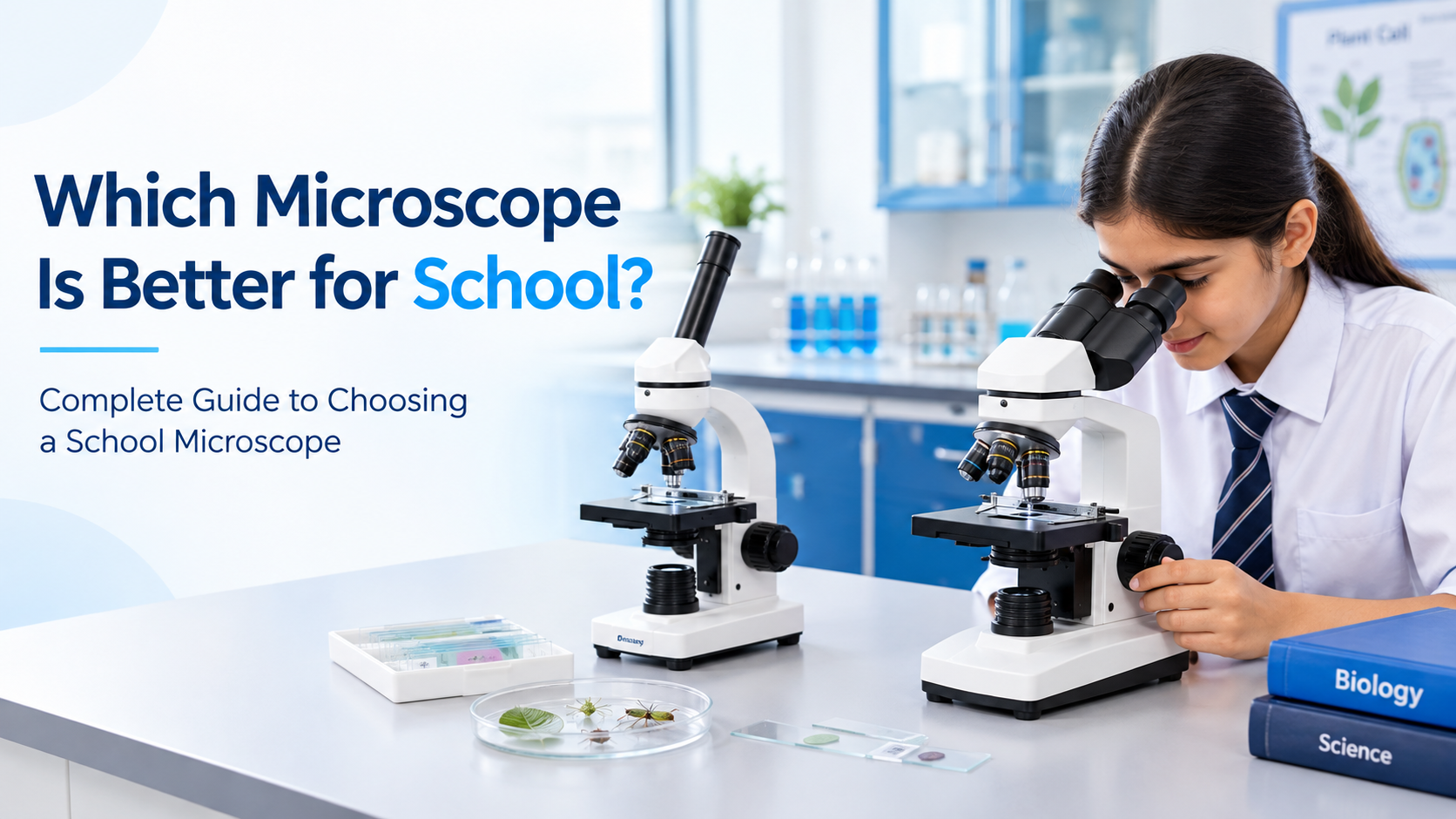
Choosing the right microscope for a school laboratory depends on the students’ age, learning level, curriculum, and the type of specimens they need to observe. For most schools, a compound light microscope is a practical choice because it allows students to study cells, tissues, microorganisms, plant structures, and prepared slides.
Which Microscope Is Best for School?
A student compound microscope is generally suitable for school laboratories. A binocular microscope can be useful for older students because it provides comfortable viewing through both eyes, while a monocular microscope is often simpler and more affordable for basic classroom use.
For schools, look for features such as:
- 10X eyepiece
- 4X, 10X and 40X objectives
- 40X to 400X magnification
- LED illumination
- Mechanical stage
- Coaxial coarse and fine focusing
- Achromatic objectives
- Strong and easy-to-use construction
Compound Microscope for School Students
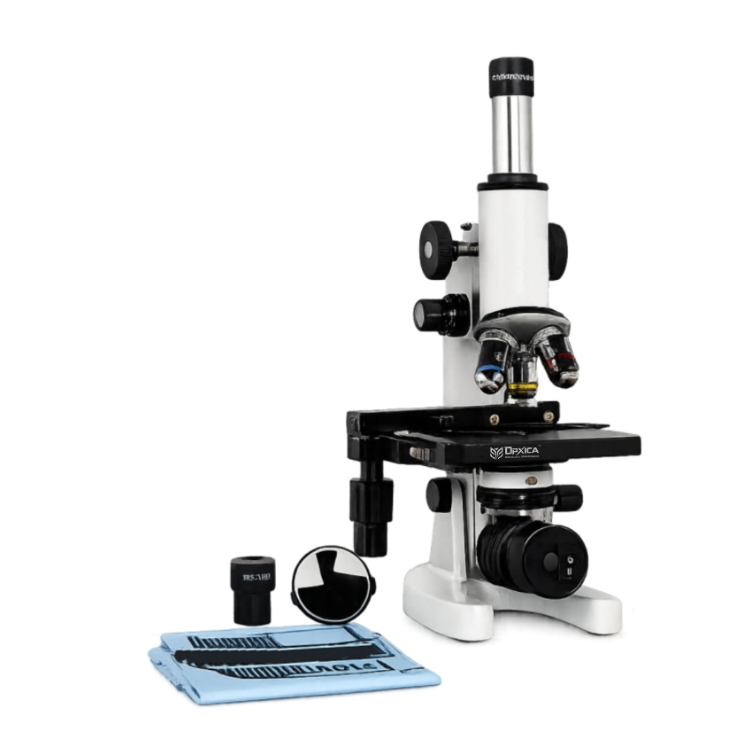
A compound microscope uses multiple lenses to provide higher magnification. It is commonly used for biology lessons where students need to observe small specimens that cannot be seen clearly with the naked eye.
Students can use a compound microscope to study:
- Plant cells
- Animal cells
- Onion peel
- Blood cells
- Microorganisms
- Pollen grains
- Leaf tissues
- Prepared biological slides
Monocular vs Binocular Microscope for School
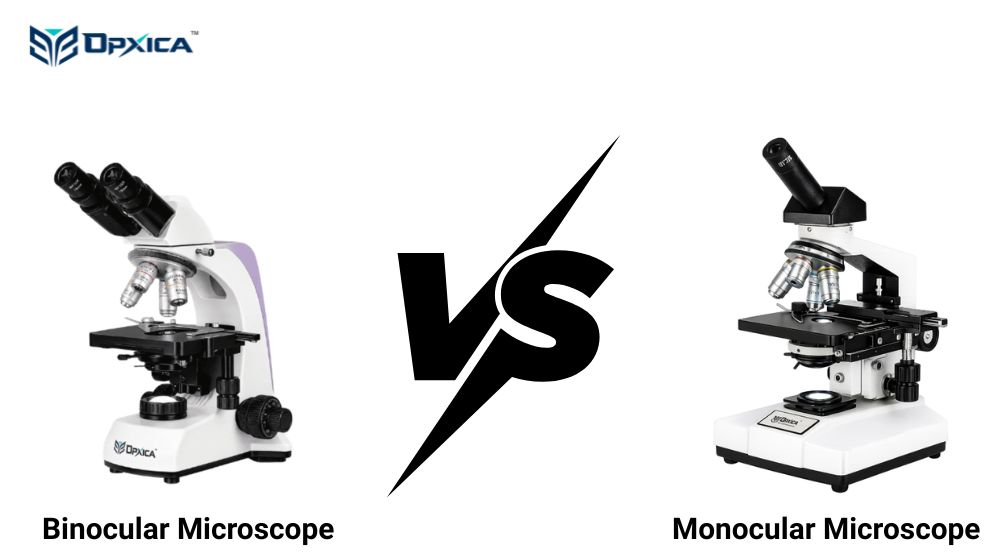
| Feature | Monocular Microscope | Binocular Microscope |
|---|---|---|
| Viewing | One eye | Both eyes |
| Cost | Usually lower | Usually higher |
| Operation | Simple | More comfortable |
| Basic school use | Suitable | Suitable |
| Extended observation | Less comfortable | More comfortable |
For basic school laboratories, a monocular compound microscope can be sufficient. For higher classes and laboratories where students spend more time observing specimens, a binocular microscope can provide a more comfortable viewing experience.
What Magnification Does a School Microscope Need?
A school microscope generally does not need extremely high magnification. 40X to 400X total magnification is suitable for many basic biology experiments.
For example:
- 4X objective × 10X eyepiece = 40X
- 10X objective × 10X eyepiece = 100X
- 40X objective × 10X eyepiece = 400X
A 100X oil-immersion objective can be useful for specific microbiology activities, but it may not be necessary for basic school-level experiments.
Important Features to Check Before Buying
1. LED Illumination
LED lighting provides consistent illumination and is generally convenient for school laboratories. It also reduces the need for frequent bulb replacement.
2. Mechanical Stage
A mechanical stage helps students move slides in a controlled manner. This makes specimen positioning easier during practical classes.
3. Fine Focusing
Fine focusing is important when students need to bring small structures into clear view, especially at higher magnification.
4. Achromatic Objectives
Achromatic objectives help provide clearer images with reduced chromatic aberration. They are a useful choice for educational microscopes.
5. Durable Construction
School microscopes are handled by many students, so the stand, stage, focusing mechanism, and optical components should be suitable for regular laboratory use.
Which Microscope Is Better for School: Monocular or Binocular?
There is no single microscope that is right for every school. The choice depends on the laboratory setup and budget.
Monocular microscopes can work well for basic practical classes and schools that need multiple microscopes at a controlled cost.
Binocular microscopes can be considered when students require longer observation sessions and greater viewing comfort.
For most biology classrooms, the key factors are optical clarity, appropriate magnification, easy focusing, illumination, and durability, rather than simply choosing the microscope with the highest magnification.
Ending Notes
For most school laboratories, a compound light microscope with 40X–400X magnification, LED illumination, mechanical stage, and coarse/fine focusing is a practical option. Monocular models are suitable for basic classroom work, while binocular models can provide greater viewing comfort for regular laboratory use.
