
What is Binocular Microscope: Diagram, Parts and Uses
 What is a Binocular Microscope?
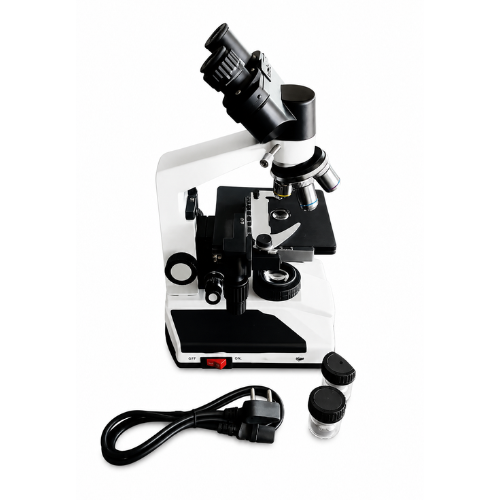
A binocular microscope is an optical instrument with two eyepieces, allowing the viewer to observe a magnified specimen using both eyes simultaneously.
3It works on the principle of compound magnification. Light passes through the specimen, gets magnified by the objective lens, and is further enlarged by the eyepiece lenses before reaching the viewer’s eyes.
It is called a binocular compound microscope because it combines two optical systems (objective and eyepiece lenses) with a dual-eyepiece viewing head.
Binocular vs Monocular Microscope
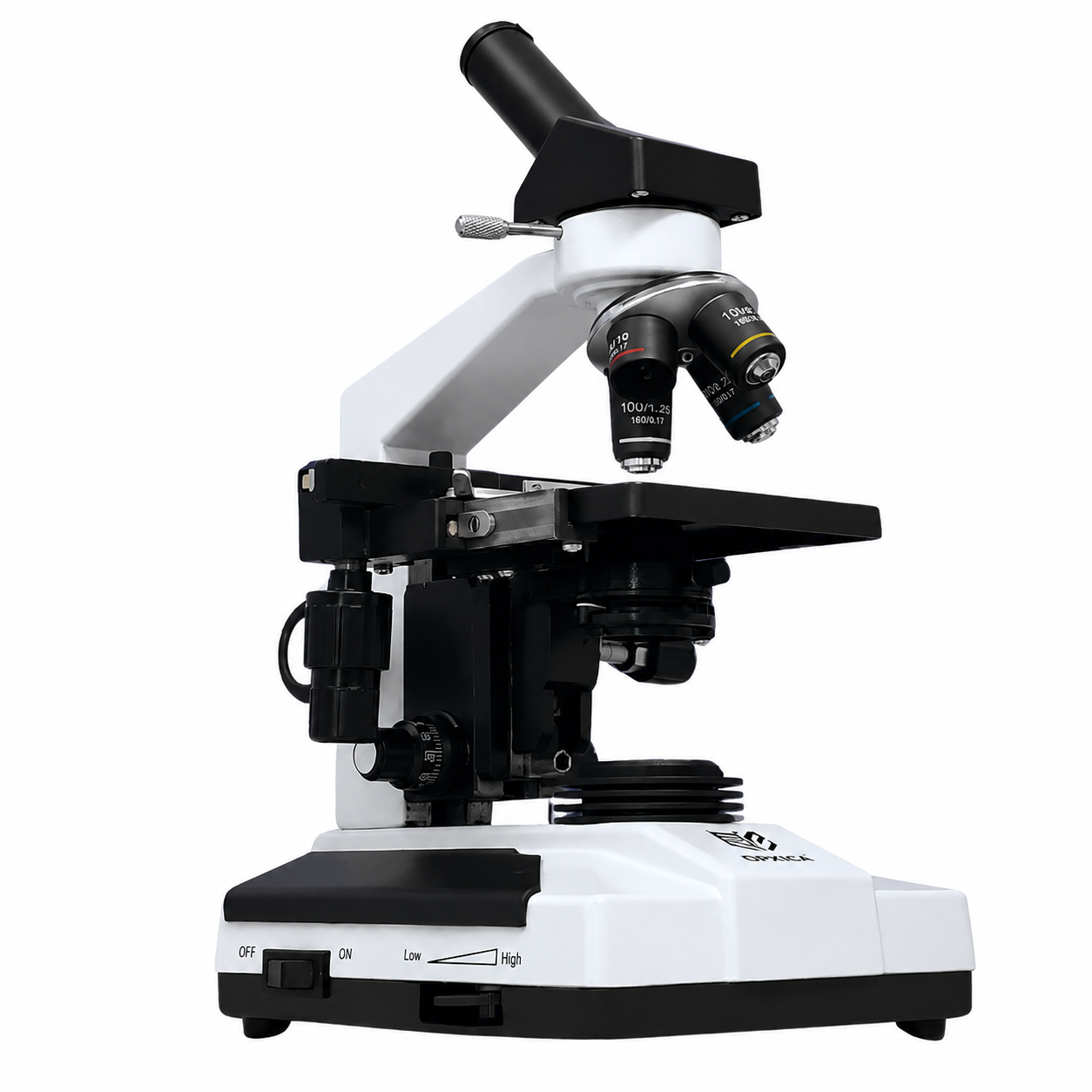
A monocular microscope has a single eyepiece, requiring users to close one eye while viewing. This often causes strain during long observation sessions.
A binocular microscope, on the other hand, uses both eyes together. This improves comfort, depth perception, and viewing accuracy, making it the preferred choice for laboratory microscope users.
Binocular Microscope Diagram
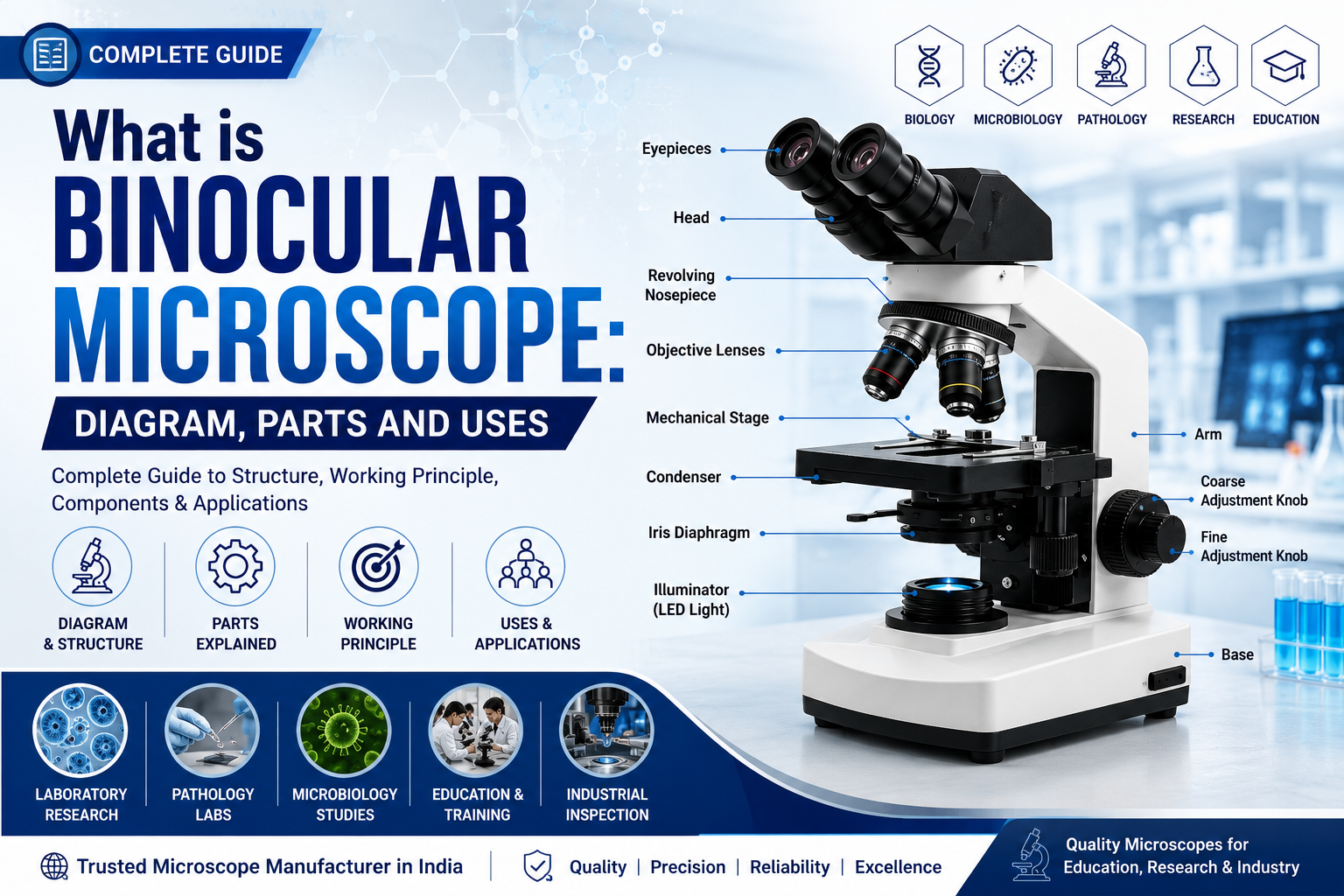
A clear binocular microscope diagram helps students and lab professionals understand how each part contributes to the overall function of the instrument.
The diagram typically shows the eyepieces at the top, connected to the head, which sits above the revolving nosepiece holding the objective lenses. Below this is the stage where the specimen slide is placed, followed by the condenser, iris diaphragm, and illuminator. The arm connects the upper body to the base, while the coarse and fine adjustment knobs sit near the arm for focusing.
Image Alt Text: Binocular Microscope Diagram with Parts Labelled
Parts of Binocular Microscope
Every binocular microscope part plays a specific role in producing a clear, magnified image.
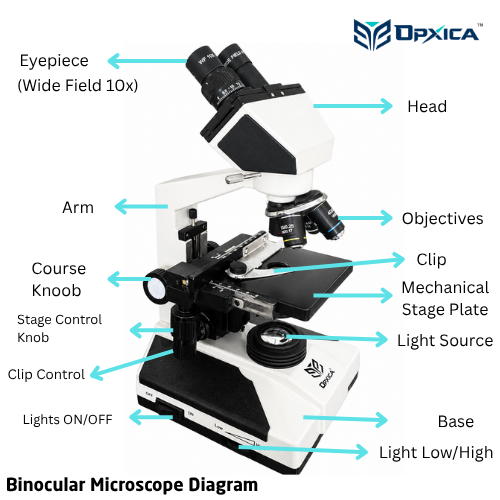
- Eyepieces (Oculars): Located at the top; magnify the image formed by the objective lens, usually at 10x power.
- Head: Houses the optical components connecting the eyepieces to the objective lenses.
- Revolving Nosepiece: Holds multiple objective lenses and rotates to switch magnification levels.
- Objective Lenses: Primary lenses that magnify the specimen; typically available in 4x, 10x, 40x, and 100x.
- Stage: Flat platform where the specimen slide is placed for viewing.
- Mechanical Stage: Allows precise, controlled movement of the slide in the X and Y directions.
- Stage Clips: Hold the slide firmly in place during observation.
- Condenser: Focuses light onto the specimen for clearer imaging.
- Iris Diaphragm: Controls the amount of light reaching the specimen.
- Illuminator: Usually LED illumination; provides the light source for viewing.
- Arm: Supports the head and connects it to the base; used for carrying the microscope.
- Base: Provides stability and support to the entire microscope.
- Coarse Adjustment Knob: Used for rough focusing by moving the stage up and down quickly.
- Fine Adjustment Knob: Used for precise focusing after coarse adjustment.
- Rack Stop: Prevents the stage from moving too close to the objective lens, protecting the slide and lens.
- Power Switch: Turns the LED illumination on or off.
Working Principle of Binocular Microscope
The working principle of a binocular microscope follows a simple optical path.
- Light from the illuminator passes through the iris diaphragm and condenser.
- The light travels through the specimen placed on the stage.
- The objective lens captures this light and forms a magnified primary image.
- This image passes through the microscope head to both eyepieces.
- The eyepieces further magnify the image, which the viewer sees using both eyes.
This dual-path optical design is what makes a binocular microscope more comfortable and accurate than single-eyepiece models.
Uses of Binocular Microscope
The uses of binocular microscope extend across multiple fields, including:
- Biology: Studying cell structures, tissues, and microorganisms.
- Pathology: Analyzing blood smears, tissue samples, and biopsies.
- Microbiology: Identifying bacteria, fungi, and parasites.
- Pharmaceutical Industry: Quality testing of raw materials and formulations.
- Medical Colleges: Practical training for MBBS and paramedical students.
- Research Laboratories: Detailed specimen analysis for scientific studies.
- Schools and Universities: Teaching biology and life sciences.
- Food Testing: Checking food samples for contamination or quality.
- Agriculture: Examining plant tissues, seeds, and soil microorganisms.
- Environmental Science: Studying water and soil samples.
- Industrial Inspection: Quality control of materials and components.
Advantages of Binocular Microscope
- Reduces eye strain during long working hours
- Provides better depth and image accuracy
- Suitable for extended laboratory and research use
- Comfortable for both left- and right-eye-dominant users
- Improves diagnostic and analytical precision
Limitations of Binocular Microscope
A binocular microscope requires proper eyepiece alignment for both eyes, which may take a short adjustment period for new users. It is also generally costlier than a basic monocular microscope and needs regular maintenance to keep the optics clean and accurate.
How to Choose the Best Binocular Microscope
When selecting the best binocular microscope for your lab, consider the following:
- Magnification range suited to your application
- Optical quality of lenses for clear imaging
- LED illumination for consistent brightness
- Objective lens options available
- Build quality and durability
- Brand reputation and after-sales support
- Warranty coverage
- Included accessories
- Budget versus features
- Intended application (education, research, or diagnostics)
Why Choose OPXICA Industries?
OPXICA Industries is a trusted binocular microscope manufacturer, known for premium optical quality and reliable performance.
As an ISO-certified manufacturer, OPXICA delivers laboratory microscope solutions for schools, hospitals, research centres, and industrial quality control laboratories across India.
With affordable pricing, nationwide supply, dedicated technical support, and custom solutions, OPXICA Industries is a preferred binocular microscope supplier for educational and research-grade needs.
If you are looking for a dependable binocular microscope manufacturer in India, explore OPXICA Industries’ range today and equip your lab with precision-engineered optical instruments.
Frequently Asked Questions (FAQ)
1. What is a Binocular Microscope? It is an optical microscope with two eyepieces that allows viewing a magnified specimen using both eyes simultaneously.
2. What are the uses of a Binocular Microscope? It is used in biology, pathology, microbiology, pharmaceutical testing, education, and industrial inspection.
3. What is the difference between binocular and monocular microscopes? A binocular microscope has two eyepieces for two-eyed viewing, while a monocular microscope has only one eyepiece.
4. What are the main parts of a Binocular Microscope? Key parts include eyepieces, objective lenses, stage, condenser, iris diaphragm, illuminator, arm, and base.
5. Which industries use Binocular Microscopes? Hospitals, pathology labs, pharmaceutical companies, schools, universities, and research institutions use them regularly.
6. What magnification does a Binocular Microscope provide? Most laboratory binocular microscopes offer magnification ranging from 40x to 1000x, depending on the objective lenses used.
7. How do you maintain a Binocular Microscope? Clean lenses regularly with lens paper, cover the microscope when not in use, and service it periodically for accurate performance.
8. Which is the best Binocular Microscope Manufacturer in India? OPXICA Industries is a leading binocular microscope manufacturer, known for optical precision, durability, and affordable pricing.
Choosing the right binocular microscope can significantly improve accuracy, comfort, and efficiency in any laboratory setting. Whether you need a microscope for a school laboratory, a research facility, or a pathology department, understanding its parts, working principle, and applications helps you make an informed decision.
For high-quality, research-grade, and student-friendly binocular microscopes, explore the range offered by OPXICA Industries. Contact their team today to find the right laboratory microscope for your institution’s needs.
Related Article
- What is Microscope?
- What Simple Microscope?
- What is Compound Microscope?
- Types of microscopes?
- Top 10 Microscope Manufacturers
