Description
Technical Specifications
| Parameter | Specification |
|---|---|
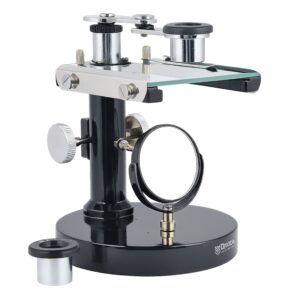
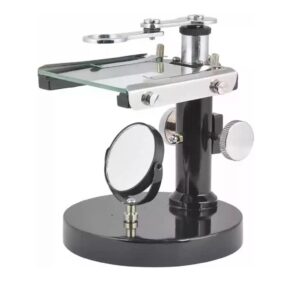
| Product Name | Advance Dissecting Microscope ADM-102 |
| Microscope Type | Dissecting Microscope |
| Magnification Range | 10X – 20X |
| Eyepieces | Interchangeable Wide Field Eyepieces |
| Viewing Head | Binocular Viewing System |
| Focusing Mechanism | Rack and Pinion Coarse Focusing |
| Illumination | Mirror-Based Natural Light Illumination |
| Stage Type | Large Working Stage with Detachable Hand Rests |
| Optical System | High-Quality Optical Glass Lenses |
| Construction | Heavy-Duty Metal Body |
| Application Areas | Educational Labs, Research Labs, Biological Studies |
| Brand | OPXICA |
Key Features
- High-precision optical system for clear and sharp specimen viewing
- Smooth rack and pinion focusing mechanism for accurate adjustment
- Wide working stage designed for comfortable specimen handling
- Interchangeable eyepieces for flexible magnification options
- Durable heavy-duty metal construction for long operational life
- Mirror-based illumination system for effective natural light usage
- Ergonomic binocular viewing system for reduced eye strain
- Suitable for laboratory, botanical, biological, and educational applications
- Compact and stable base design for vibration-free observation
- Manufactured by OPXICA with quality-tested optical engineering
Working Purpose
The Advance Dissecting Microscope ADM-102 is designed to provide enlarged and detailed observation of small specimens, surfaces, biological tissues, insects, plant structures, and laboratory samples. It helps students, researchers, and laboratory professionals perform accurate specimen analysis with improved visibility and depth perception.
This microscope is widely used in biology laboratories, educational institutions, pathology departments, research centers, agricultural studies, and scientific training programs where low-magnification precision observation is required. Its advanced optical clarity and stable viewing system make it highly effective for routine laboratory work and demonstration purposes.
Wrapping Notes
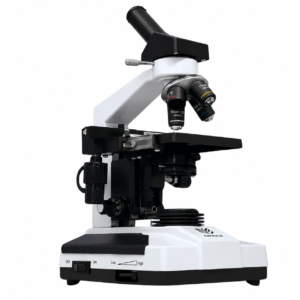
The Binocular Research Microscope BRM-126 is a dependable laboratory instrument that combines quality optics, ergonomic design, and reliable illumination technology. Built to meet the demands of educational institutions, research laboratories, diagnostic centers, and scientific facilities, it delivers exceptional image clarity and user comfort. Whether used for routine laboratory studies or detailed specimen analysis, the Binocular Research Microscope offers outstanding performance, durability, and precision for modern microscopy applications. Its robust construction, user-friendly operation, and long service life make it a valuable investment for laboratories seeking accurate and efficient microscopic examination solutions.
Frequently Asked Questions (FAQs)
1. What is a dissecting microscope?
A dissecting microscope, also known as a stereo microscope, is a low-magnification optical instrument used to observe the external structure of specimens in three dimensions. Unlike compound microscopes, it provides a wider field of view and greater working distance, making it ideal for examining insects, plants, biological samples, electronic components, and laboratory specimens.
2. What is the working principle of a dissecting microscope?
The working principle of a dissecting microscope is based on reflected or transmitted light combined with two separate optical paths. Each eyepiece receives light from a different angle, allowing the user to observe a three-dimensional (3D) image with excellent depth perception. The OPXICA Advance Dissecting Microscope ADM-102 uses high-quality optical lenses and a binocular viewing system for clear, comfortable observation.
3. What are the main parts and functions of a dissecting microscope?
A dissecting microscope consists of several important components, including:
- Binocular viewing head for comfortable observation
- Wide-field eyepieces for magnification
- Objective lenses for image formation
- Rack and pinion focusing mechanism for precise adjustment
- Large working stage for specimen placement
- Mirror illumination system for natural lighting
- Heavy-duty base for stability
Each part works together to produce a bright, enlarged, and three-dimensional image.
4. What is the magnification range of the OPXICA ADM-102 Dissecting Microscope?
The OPXICA Advance Dissecting Microscope ADM-102 offers a magnification range of 10X to 20X, making it suitable for biological studies, educational laboratories, botanical observations, insect examination, specimen dissection, and routine laboratory work.
5. What are the uses of a dissecting microscope?
A dissecting microscope is commonly used for:
- Biological specimen observation
- Plant and botanical studies
- Insect identification
- Dissection practicals
- Educational laboratory experiments
- Medical teaching
- Agricultural research
- Quality inspection
- Industrial component examination
- Scientific demonstrations
Its low magnification and large working distance make it ideal for observing larger specimens.
6. Why is a binocular dissecting microscope better than a monocular microscope?
A binocular dissecting microscope provides a natural three-dimensional view with improved depth perception and reduced eye strain. It allows users to work comfortably for extended periods and perform accurate specimen manipulation during laboratory practicals and research activities.
7. What is the difference between a dissecting microscope and a compound microscope?
A dissecting microscope is designed for observing larger, opaque specimens at low magnification (typically 10X–40X), producing a three-dimensional image. A compound microscope is used for viewing thin, transparent specimens at higher magnifications, generally ranging from 40X to 1000X or more, and produces a two-dimensional image.
8. What is the price of a dissecting microscope?
The price of a dissecting microscope depends on factors such as optical quality, magnification range, illumination type, build quality, and accessories. Educational models are generally more affordable, while research-grade stereo microscopes with advanced optics and digital imaging capabilities are available at higher price points. Contact OPXICA for the latest pricing and quotations.
9. Which laboratories use dissecting microscopes?
Dissecting microscopes are widely used in:
- Biology laboratories
- Educational institutions
- Medical colleges
- Research laboratories
- Agricultural laboratories
- Pharmaceutical laboratories
- Botanical research centers
- Zoology departments
- Industrial quality control laboratories
- Electronics inspection facilities
10. Is the OPXICA ADM-102 suitable for educational laboratories?
Yes. The OPXICA Advance Dissecting Microscope ADM-102 is specifically designed for schools, colleges, universities, biology laboratories, and scientific training centers. Its durable metal construction, ergonomic binocular head, wide working stage, and high-quality optics make it suitable for regular classroom and laboratory use.
11. What illumination system does the OPXICA ADM-102 use?
The OPXICA ADM-102 uses a mirror-based natural light illumination system, which provides bright specimen observation without requiring an integrated electric light source. It is ideal for routine laboratory demonstrations and educational applications.
12. Why choose the OPXICA Advance Dissecting Microscope ADM-102?
The OPXICA ADM-102 combines precision optics, a binocular viewing system, interchangeable wide-field eyepieces, smooth rack-and-pinion focusing, a spacious working stage, and a rugged metal body. These features make it a dependable choice for educational institutions, biology laboratories, research centers, and scientific training environments.
13. Can a dissecting microscope be used for insect and plant studies?
Yes. A dissecting microscope is one of the best instruments for examining insects, leaves, flowers, seeds, roots, stems, and other biological specimens because it provides excellent depth perception and a wide viewing area without damaging delicate samples.
14. How do I maintain a dissecting microscope?
To keep a dissecting microscope in excellent condition:
- Clean optical lenses only with lens paper and approved lens cleaner.
- Cover the microscope when not in use.
- Store it in a dry, dust-free environment.
- Avoid touching lenses with bare fingers.
- Keep the focusing mechanism clean and properly adjusted.
- Inspect optical components periodically for dust or contamination.
Proper maintenance helps preserve image quality and extends the microscope’s service life.
15. Is the OPXICA ADM-102 available for bulk supply and OEM orders?
Yes. OPXICA supplies the ADM-102 for educational institutions, universities, laboratories, distributors, and government organizations. Bulk purchasing, institutional supply, and OEM/private-label manufacturing options are available upon request.