
How to Choose the Right Microscope: A Complete Buyer’s Guide
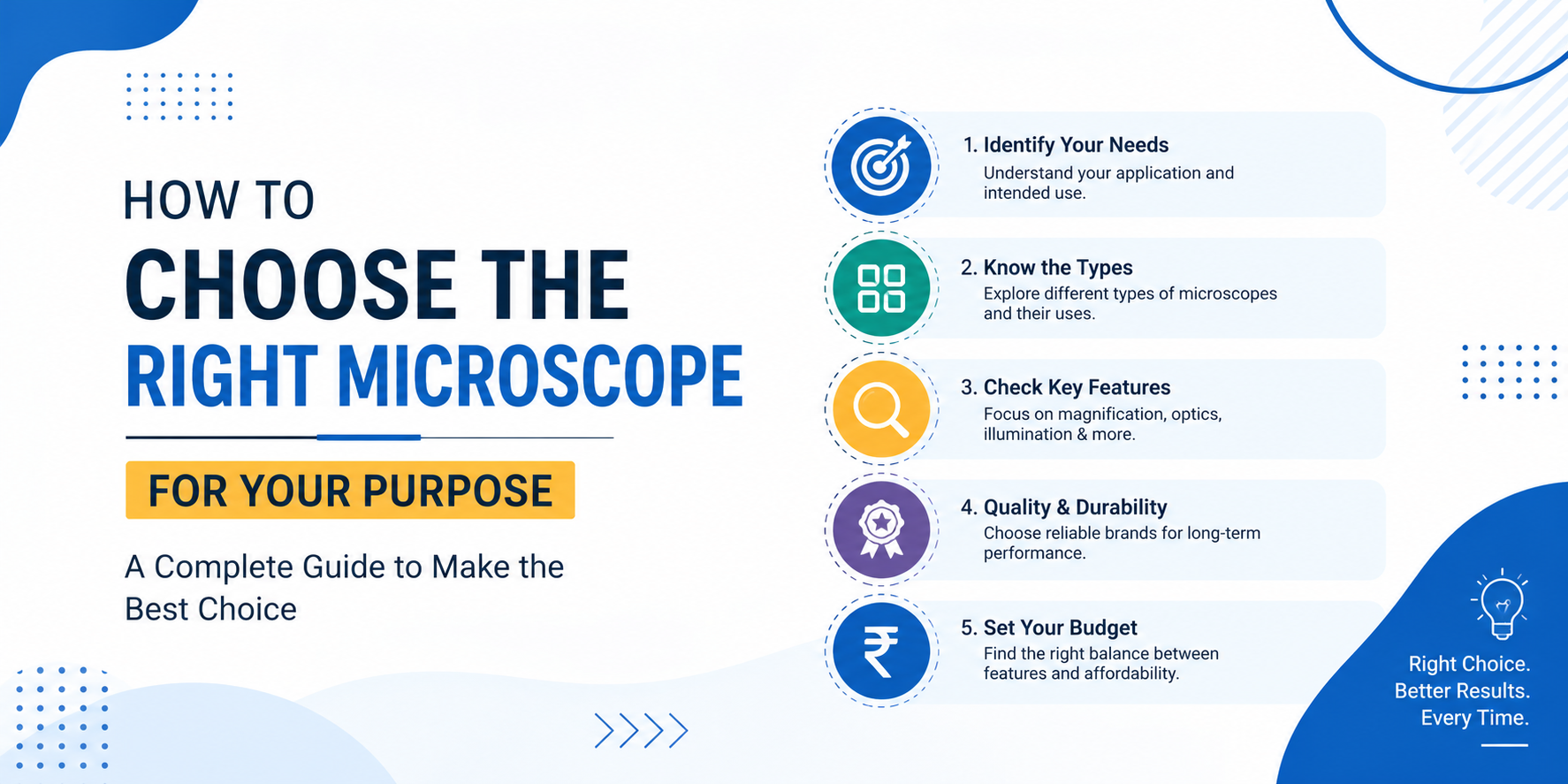
 Introduction
Buying a microscope can feel confusing. There are dozens of types, brands, and price ranges to consider.
If you pick the wrong one, you waste money and get poor results. That’s why learning how to choose the right microscope matters more than most buyers realize.
This guide walks you through every step of the decision. You’ll learn about microscope types, magnification, lens quality, and budget so you can buy with confidence.
Whether you’re a student, teacher, lab technician, or business owner, this microscope buying guide gives you the practical knowledge you need.
What is a Microscope?

A microscope is an optical instrument that magnifies small objects so the human eye can see them clearly. It uses lenses, light, and sometimes digital sensors to enlarge details invisible to the naked eye.
Microscopes are used in schools, hospitals, research labs, and factories. Each field needs a different type of microscope built for its specific tasks.
Why Choosing the Right Microscope Matters
The right microscope saves time, reduces errors, and delivers accurate results. The wrong one leads to blurry images, eye strain, and frustration.
A student microscope won’t handle industrial inspection work. Likewise, a heavy research microscope is overkill for a classroom. Matching the tool to the task is the foundation of any good purchase.
Good optics also protect your investment. A well-built microscope can last 10–15 years with proper care, so the decision you make today affects your work for years to come.
Step 1: Identify Your Application
Before comparing models, define exactly how you’ll use the microscope. Your application decides everything else — type, magnification, and budget.
Education (School and College) Students need durable, easy-to-use microscopes for basic biology lessons. Simplicity and affordability matter more than advanced features here.
Medical laboratory labs need microscopes for blood smears, tissue samples, and pathology work. Accuracy and comfortable eyepieces are essential for long working hours.
Research Research institutes require high-resolution optics, advanced illumination, and often camera integration for detailed documentation and analysis.
Industrial Inspection Factories use microscopes to inspect materials, welds, and finished parts. These microscopes need strong build quality and often higher working distances.
Electronics PCB inspection and soldering work require stereo microscopes with a wide field of view and comfortable working distance.
Metallurgy Metallurgical microscopes examine metal surfaces, grain structure, and material defects using reflected light.
Jewellery Jewellers use stereo microscopes to inspect gemstones, check clarity, and perform detailed setting work.
Pharmaceuticals Pharma companies use microscopes for particle size analysis, contamination checks, and quality testing during production.
Quality Control QC departments across industries rely on microscopes to verify product consistency and catch defects before shipping.
Step 2: Understand Different Types of Microscopes
Once you know your application, match it to the correct microscope type. Here are the most common types of microscopes available today.

1. Compound Microscope
A compound microscope is a high-precision optical instrument designed to observe microscopic specimens that cannot be seen with the naked eye. It uses multiple objective lenses and an eyepiece to provide clear, high-resolution magnification for examining cells, bacteria, tissues, blood samples, and microorganisms. Compound microscopes are widely used in schools, colleges, medical laboratories, hospitals, research institutes, pathology labs, and biological science applications for accurate analysis and detailed observation.
Advantages: High magnification, affordable, widely available.
Disadvantages: Limited to thin, transparent specimens; not suitable for solid objects.
Best for: Schools, colleges, medical labs, and biological research. This is the most common biological microscope type used worldwide.
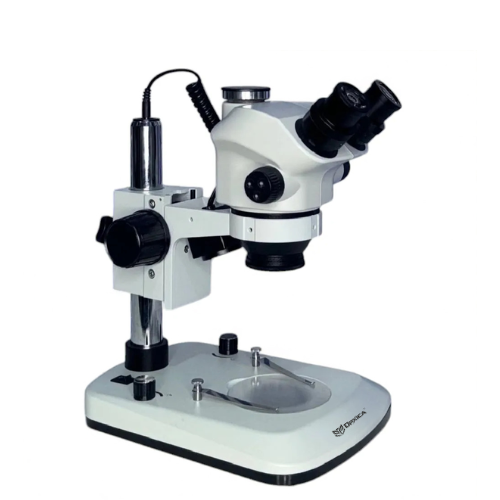
2. Stereo Microscope
A stereo microscope provides a high-quality three-dimensional (3D) view of specimens at low magnification, typically ranging from 10x to 90x. Unlike compound microscopes, it offers excellent depth perception, making it ideal for examining solid, opaque, and larger objects in fine detail. Stereo microscopes are widely used for electronics inspection, jewelry analysis, entomology, botanical studies, precision assembly, quality control, and industrial applications where accurate surface observation is essential.
Advantages: 3D viewing, large working distance, comfortable for long use. Disadvantages: Lower magnification limits fine cellular detail.
Best for: Electronics, jewellery, dissection, and industrial inspection.
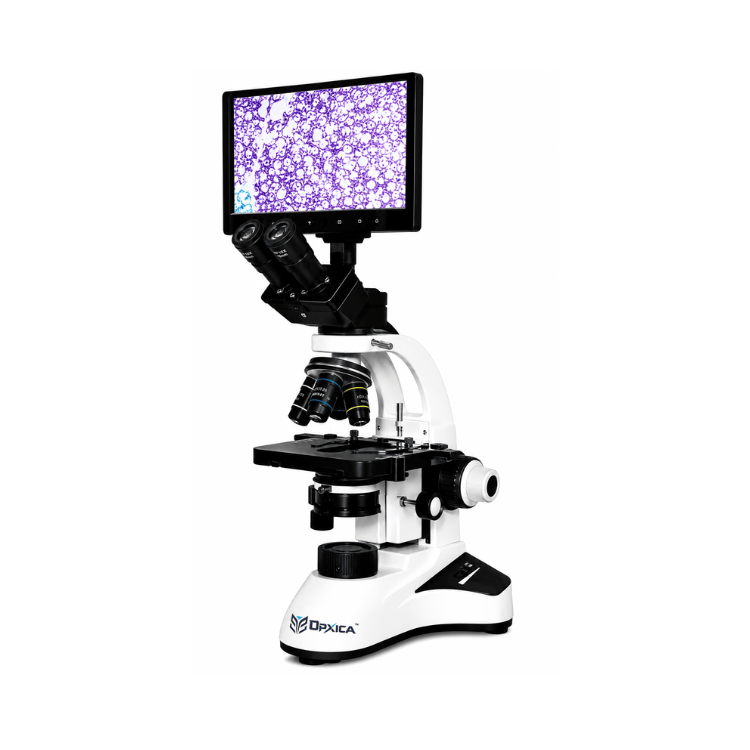
3. Digital Microscope
A digital microscope combines advanced optical technology with a built-in digital camera to display high-resolution images and videos on a computer, monitor, or LCD screen. It enables real-time viewing, image capture, video recording, and precise measurements, making it ideal for education, research, medical laboratories, electronics inspection, quality control, forensic analysis, and industrial applications. Digital microscopes enhance collaboration, simplify documentation, and improve inspection accuracy without requiring direct observation through traditional eyepieces.
Advantages: Easy image sharing, great for teaching and documentation. Disadvantages: Image quality depends heavily on sensor and software quality.
Best for: Classrooms, quality control, and remote inspection work.
Metallurgical Microscope
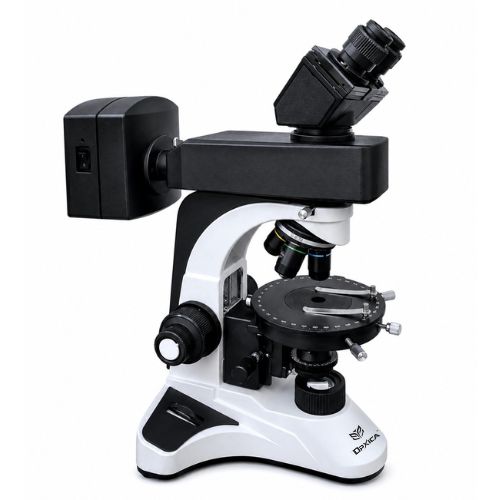
A metallurgical microscope is specifically designed to examine opaque materials such as metals, alloys, ceramics, minerals, and industrial components using reflected (incident) light instead of transmitted light. It provides high-resolution imaging to analyze grain structures, surface defects, cracks, coatings, and material composition. Metallurgical microscopes are widely used in metallurgy, manufacturing, quality control, automotive, aerospace, engineering, and research laboratories for precise material inspection and failure analysis.
Advantages: Reveals surface structure and defects clearly.
Disadvantages: Not designed for transparent biological samples.
Best for: Metallurgy labs, manufacturing, and materials science.
Polarizing Microscope
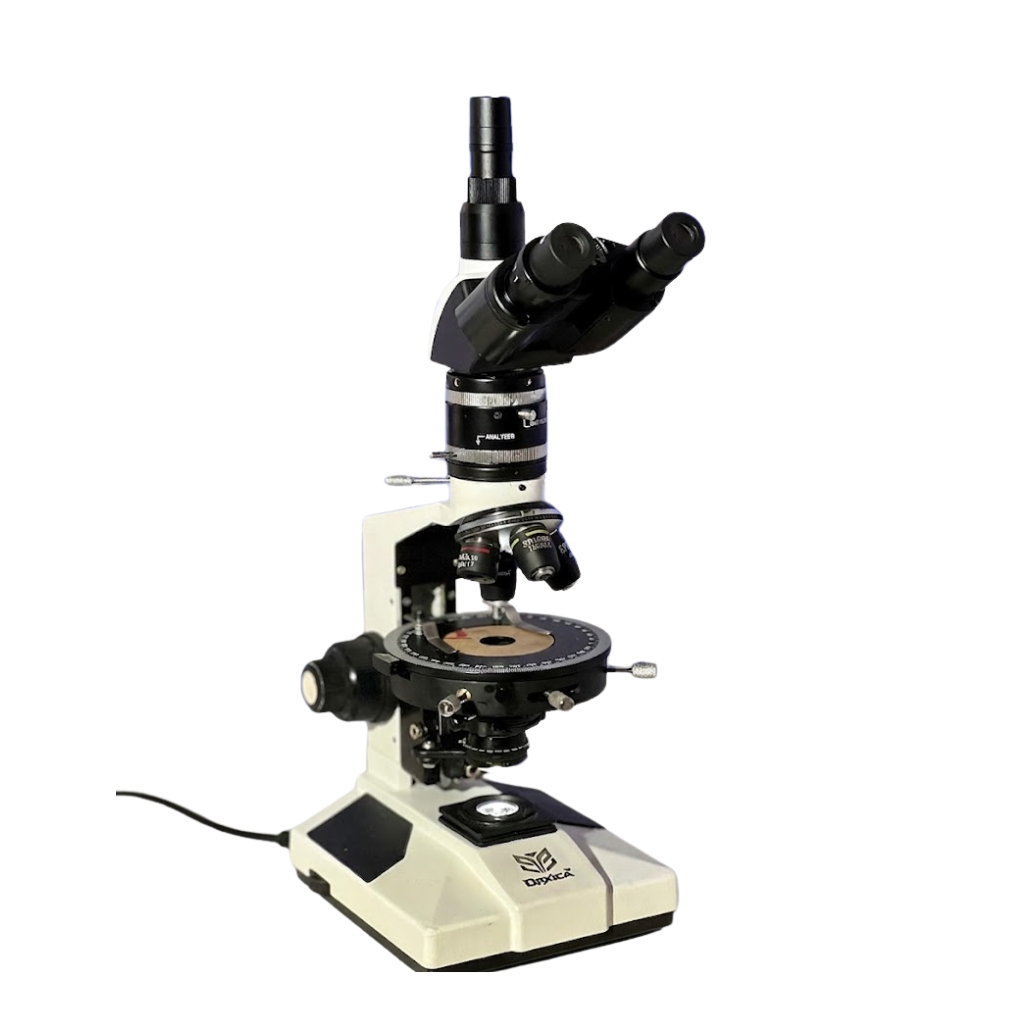
A polarizing microscope is a specialized optical instrument that uses polarized light to examine crystalline structures, birefringent materials, and anisotropic specimens with exceptional clarity. It features a 360° rotatable circular stage, allowing precise rotation of samples to observe changes in optical properties from different angles. This microscope is widely used for analyzing minerals, crystals, polymers, fibers, geological specimens, and pharmaceutical materials. Polarizing microscopes are extensively used in geology, mineralogy, material science, forensic science, research laboratories, and quality control for accurate material identification and structural analysis.
Advantages: Reveals internal structure invisible under normal light.
Disadvantages: Specialized use case; steep learning curve for beginners.
Best for: Geology, mineralogy, and pharmaceutical crystal analysis.
Fluorescence Microscope
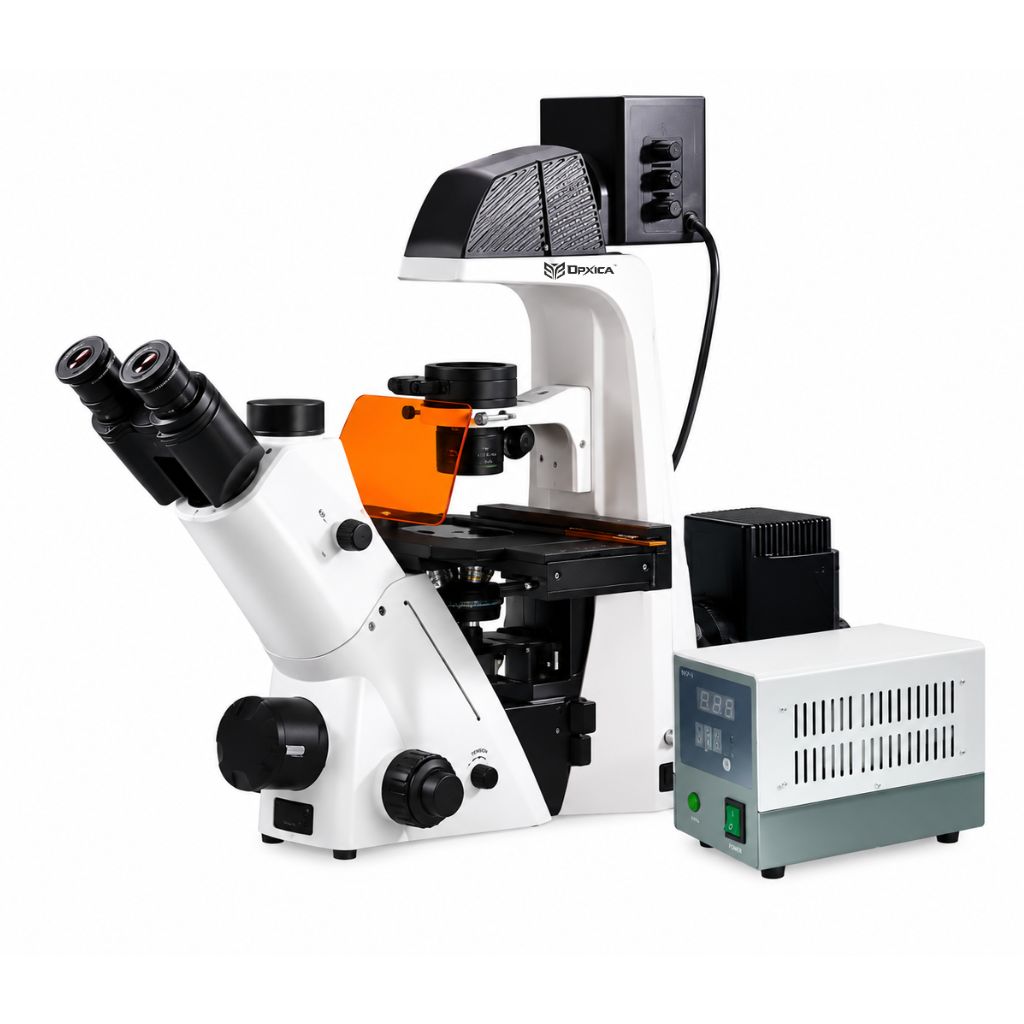
A fluorescence microscope is an advanced optical instrument that uses specific wavelengths of light to excite fluorescent dyes or markers, causing labeled cells, tissues, and microorganisms to emit bright, high-contrast images. This technique allows scientists to visualize cellular structures, proteins, DNA, and biological processes that are invisible under conventional light microscopy. Fluorescence microscopes are widely used in molecular biology, microbiology, pathology, immunology, medical diagnostics, pharmaceutical research, and life science laboratories for detailed cellular analysis and advanced scientific research.
Advantages: Extremely detailed imaging for advanced research.
Disadvantages: Expensive and requires trained operators.
Best for: Research institutes and advanced medical diagnostics.
Step 3: Choose the Right Magnification
Magnification tells you how much larger a specimen appears compared to its actual size. Common levels include 40x, 100x, 400x, and 1000x.
- 40x: Good for scanning large structures, like whole insects or plant parts.
- 100x: Suitable for general classroom observation of cells.
- 400x: Reveals detailed cell structures, common in biology labs.
- 1000x: Used with oil immersion for viewing bacteria and fine cellular detail.
Higher magnification does not always mean better image quality. A microscope with poor lenses at 1000x can produce a blurrier image than a quality microscope at 400x. Resolution and clarity matter more than the magnification number alone.
Step 4: Lens Quality
Lens quality determines how sharp and accurate your images will be, regardless of magnification power.
Achromatic Objectives correct color distortion and are standard in most affordable microscopes. They offer good clarity for everyday use.
Plan Objectives produce a flat, sharp image across the entire field of view, which is important for photography and detailed research.
Optical Glass quality affects light transmission and image sharpness. Higher-grade glass reduces distortion and improves contrast.
Image Resolution refers to the microscope’s ability to distinguish fine details. Better resolution means clearer, more usable images.
Numerical Aperture (NA) measures a lens’s ability to gather light and resolve detail. A higher NA generally means better resolution at high magnification.
Working Distance is the space between the lens and the specimen. A longer working distance makes it easier to manipulate samples under the lens.
Step 5: Eyepiece Selection
Eyepiece type affects comfort, image quality, and camera compatibility. There are three main options.
| Feature | Monocular | Binocular | Trinocular |
|---|---|---|---|
| Viewing Comfort | Moderate (one eye) | High (two eyes) | High (two eyes) |
| Eye Strain | Higher over time | Lower | Lower |
| Camera Support | No | No | Yes |
| Best For | Basic students | Labs, schools, hospitals | Research, documentation, teaching |
| Price Range | Lowest | Moderate | Higher |
A monocular microscope uses a single eyepiece and suits beginners on a tight budget.
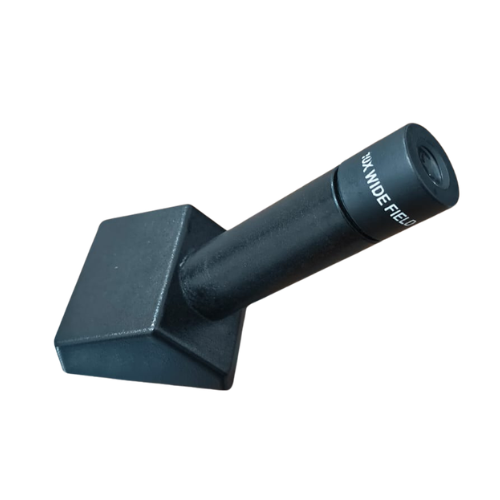
A binocular microscope uses two eyepieces, reducing eye strain during long sessions.
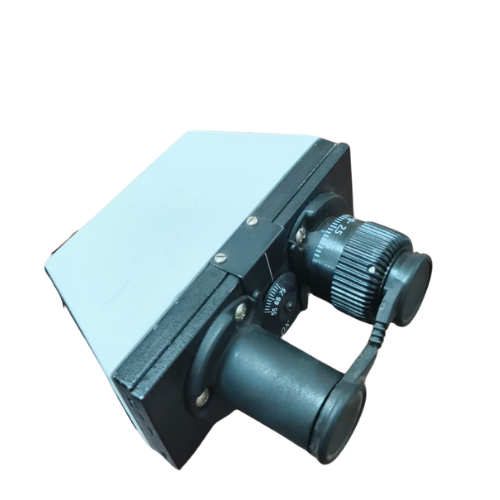
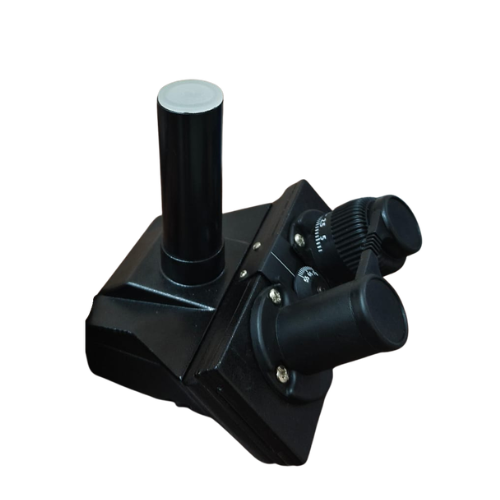
A trinocular microscope adds a third port for a camera, making it ideal for anyone who needs to capture or share images.
Step 6: Illumination System
Lighting directly affects image clarity, so choose the right illumination system for your samples.
LED illumination is energy-efficient, cool-running, and long-lasting, making it the modern standard for most microscopes.
Halogen illumination offers warm, bright light but generates more heat and consumes more power than LED.
Reflected light shines onto the surface of opaque samples, essential for metallurgical and industrial inspection.
Transmitted light passes through thin, transparent samples from below, standard for biological and medical microscopy.
Step 7: Camera Compatibility
If you need to document, teach, or share findings, camera compatibility becomes essential.
Digital microscopes come with built-in cameras and display images directly on a screen, perfect for classroom demonstrations and quick inspections.
Trinocular microscopes allow you to attach an external camera while still using traditional eyepieces, offering flexibility for both viewing and capturing images.
Choose a camera-compatible microscope if you need to record data for research papers, train students visually, or maintain quality control documentation. Teachers benefit from projecting live images for the whole class, while researchers rely on captured images for publications and reports.
Step 8: Mechanical Features
Mechanical build quality affects daily usability and long-term durability.
A mechanical stage lets you move the sample precisely using control knobs instead of your hands, improving accuracy.
Coaxial focus combines coarse and fine focus into a single control point, making adjustments faster and more intuitive.
Fine focus allows small, precise adjustments needed for sharp, high-magnification viewing.
A rackless stage design reduces mechanical wear and offers smoother movement over time.
Ergonomic design reduces fatigue during long sessions, which matters for lab technicians and researchers using the microscope daily.
Interpupillary adjustment lets users adjust the distance between eyepieces to match their eyes, essential for binocular and trinocular models.
Diopter adjustment compensates for differences in vision between a user’s two eyes, improving image sharpness for each individual.
Step 9: Budget Guide
Price varies significantly based on type, optics, and intended use. Here’s a general pricing overview to help you plan your budget.
| Microscope Type | Typical Use | Approximate Price Range (INR) |
|---|---|---|
| Student Microscope | Schools, colleges, beginners | ₹4,000 – ₹15,000 |
| Laboratory Microscope | Hospitals, diagnostic labs | ₹15,000 – ₹60,000 |
| Research Microscope | Universities, research institutes | ₹60,000 – ₹3,00,000+ |
| Industrial Microscope | Manufacturing, QC, metallurgy | ₹40,000 – ₹2,50,000+ |
Prices vary by brand, optics quality, and included accessories, so treat this table as a general reference rather than a fixed quote.
Step 10: Build Quality
A microscope’s construction determines how long it will last and how consistently it performs.
Metal construction offers better stability and durability compared to plastic bodies, especially for daily lab use.
Durability matters most in busy environments like schools and hospitals, where the instrument gets handled frequently.
Dust protection through sealed components keeps optics clean and extends the microscope’s usable life.
Smooth focusing mechanisms prevent jerky movements that can blur images or damage slides.
A solid warranty signals manufacturer confidence and protects your investment against defects.
Step 11: Service and After-Sales Support
A microscope needs maintenance and calibration over its lifetime, so after-sales support matters as much as the initial purchase.
Reliable spare parts availability prevents long downtime if a component wears out or breaks. Regular calibration keeps measurements and image quality accurate, especially in labs following quality standards.
A strong warranty and responsive service team give you peace of mind, particularly for institutions running microscopes daily across multiple departments.
Common Mistakes Buyers Make
- Choosing magnification power without checking lens quality or resolution.
- Buying a compound microscope for inspecting solid, opaque objects.
- Ignoring working distance, making sample handling difficult.
- Overlooking build quality and choosing all-plastic bodies for daily use.
- Skipping a hands-on demo or product trial before purchase.
- Not checking eyepiece type, leading to eye strain over time.
- Underestimating the total cost, including accessories and calibration.
- Choosing the cheapest option without checking warranty terms.
- Ignoring after-sales support and spare parts availability.
- Buying based on brand name alone, without matching features to actual application.
- Forgetting to check illumination type for the intended sample type.
Expert Tips Before Buying
- Define your exact application before comparing models.
- Prioritize lens quality over raw magnification numbers.
- Test the microscope in person or request a demo video if possible.
- Choose binocular or trinocular eyepieces for daily, long-term use.
- Check numerical aperture and working distance for your sample type.
- Confirm camera compatibility if documentation is important to you.
- Ask about warranty length and what it actually covers.
- Compare after-sales service and spare parts availability.
- Buy from an established microscope manufacturer in India or a reputable global brand.
- Set a realistic budget that includes accessories, not just the base unit.
- Read verified user reviews from similar institutions or industries.
Quick Buying Guide Box
Quick Checklist Before You Buy:
- ✅ Application clearly defined (education, lab, research, industry)
- ✅ Correct microscope type selected
- ✅ Magnification matched to actual need
- ✅ Lens quality and NA verified
- ✅ Eyepiece type chosen (monocular/binocular/trinocular)
- ✅ Illumination system suits your samples
- ✅ Camera compatibility confirmed, if needed
- ✅ Budget finalized, including accessories
- ✅ Warranty and service support checked
- ✅ Supplier reputation verified
Why Choose OPXICA?
Once you know what to look for, choosing a trustworthy supplier becomes the final step. OPXICA is a microscope manufacturer in India offering a wide range of optical instruments for education, laboratory, and industrial use.
OPXICA manufactures over 200 microscope models, covering compound, stereo, digital, and industrial applications. As a broader microscope supplier, the company also provides 500+ laboratory equipment items, making it a practical option for institutions sourcing multiple products.
The company focuses on quality manufacturing, consistent optical standards, and reliable after-sales support. For schools, hospitals, and industries needing bulk supply, OPXICA offers competitive pricing without compromising on build quality.
If you’re comparing manufacturers, it’s worth evaluating OPXICA’s catalog alongside other options to see which best fits your specific application and budget.
[Internal link suggestion: Link to OPXICA’s microscope product catalog page]
Frequently Asked Questions
How do I choose the right microscope for my needs?
Start by identifying your application, then match the microscope type, magnification, and features to that specific use case.
What is the best microscope for students?
A basic compound microscope with binocular eyepieces and 40x–400x magnification works well for most student needs.
What is the difference between a compound and a stereo microscope?
A compound microscope magnifies thin, transparent samples at high power, while a stereo microscope offers 3D views of solid objects at lower magnification.
Which microscope is best for a medical laboratory?
A binocular or trinocular compound microscope with good optics and durable build quality suits most diagnostic lab work.
Which magnification is best for viewing bacteria?
Viewing bacteria typically requires 1000x magnification with oil immersion for clear, detailed images.
Why does lens quality matter more than magnification?
Poor lenses at high magnification produce blurry images, while quality lenses at moderate magnification often show sharper, more useful detail.
Can a digital microscope replace a traditional microscope?
Yes, for many teaching and inspection tasks, though some research applications still prefer traditional optical eyepieces for direct viewing.
What is a trinocular microscope used for?
A trinocular microscope allows simultaneous eyepiece viewing and camera attachment, useful for documentation, teaching, and research.
How much does a laboratory microscope cost in India?
Laboratory microscopes typically range from ₹15,000 to ₹60,000, depending on optics, brand, and included features.
Why is working distance important in a microscope?
A longer working distance makes it easier to handle samples, adjust focus, and work comfortably under the lens.
Can I use one microscope for both biological and industrial work?
Generally no, since biological work needs transmitted light and thin samples, while industrial inspection needs reflected light and solid samples.
What should I check before buying from a microscope manufacturer in India?
Check product range, warranty terms, after-sales service, spare parts availability, and verified customer reviews.
How often should a microscope be calibrated?
Most labs calibrate microscopes annually, though frequency can vary based on usage intensity and industry standards.
Which microscope is best for industrial quality control?
A stereo or metallurgical microscope with strong build quality and reflected light illumination suits most QC inspection tasks.
Can I buy microscopes in bulk for a school or institution?
Yes, many manufacturers, including OPXICA, offer bulk supply options with competitive institutional pricing.
Wrapping Notes
Choosing the right microscope comes down to three things: your application, optical quality, and long-term value. Magnification numbers and low prices matter far less than getting the right fit for your actual work.
Use this microscope buying guide to match your needs with the correct type, features, and budget. Whether you’re a student, lab technician, or industrial buyer, focus on optical performance and reliable support over price alone.
A well-chosen microscope pays for itself through years of accurate, reliable results.
